You are leaving girlscouts.org for a website opened by an external party. You will be subjected to the privacy and security policies of the website
A Taste of History: Christmas Dinner with the Gordon Family at the Turn-Of-The-Century
Written by Elizabeth Srsic | December 18, 2025
“I don’t remember the journeys, particularly, but I remember the arrivals: the stampede up the steep steps of the old white-columned house, the wreaths in the windows, the smilax twinned around the tall mirrors and the old portraits, the coal fires muttering in their grates under black-marble mantels, the indescribable blended smells of good food and old leather and coal smoke and furniture polish, the wonderful soaring knowledge that it was almost Christmas and we were home.” — Arthur Gordon Jr.
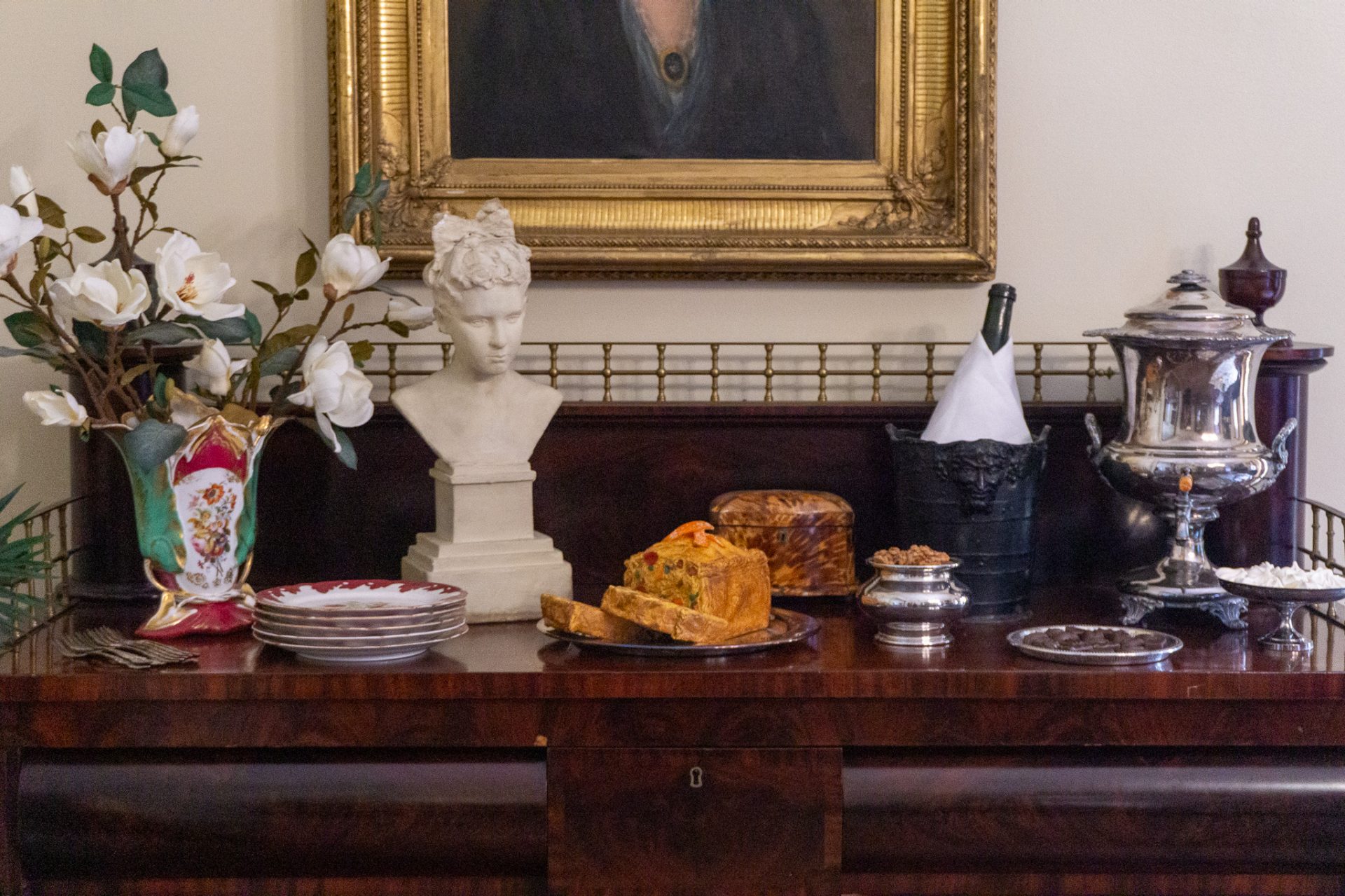
SAVANNAH, GA - Before the Juliette Gordon Low Birthplace Museum was a place for Girl Scouts and museum visitors from all over the world to gather and discover where the Movement began, it was the epicenter of Gordon family life in the 19th and early 20th century. Every year, Gordons from near and far travelled to 10 East Oglethorpe for birthdays, anniversaries, and, of course, Christmases. According to letters, accounts, and other documents, Christmas at the “old house” was a crowded, hectic, and beloved affair – “itself a symbol of Christmas.” Depending on the year, there could be nearly two-dozen Gordons and their domestic staff packed into every available room. That’s a lot of mouths to feed!
In many cases, food is a quintessential and defining element of holiday traditions, and Christmas is no exception. In the 19th century, several magazines and publications tried to curate the prefect American Christmas dinner, but America has always been a melting pot (or tossed salad) of cultures and traditions and a single, unified vision of Christmas dinner never caught on. Whether it’s turkey, ham, roast beef, fired chicken, tamales, or seven fishes, American Christmas dinner traditions vary from family to family, and we are lucky to have multiple accounts of what turn-of-the-century Gordons were eating during the holiday season.
When George Arthur Gordon, Jr. and his brother Edward returned from boarding school in the wee hours of the morning, they would immediately sit down to a special breakfast served by Elijiah Green, who worked in the Gordon household for many years. Their breakfast consisted of shad roe and hominy, or hot biscuits and hash, or waffles with Georgia cane syrup. Waffles were their particular favorite, and they would compete with one another to see who could eat more waffles than President Taft did when he famously visited in 1909. If you’re playing along at home, the record was seven complete waffles, or twenty-eight quarters.
Throughout the day, snacks and treats were prepared to entertain friends and neighbors who would stop by to visit. Eggnog, roasted pecans, meringue cookies called “Creole kisses,” and homemade fruitcakes.
“What I remember chiefly about these fruit cakes was their aroma, a rich, dark mahogany-colored smell that lurked in the lower right-hand compartment of the big sideboard and rose up at you when you opened the door like a genii out of a bottle. There was none of this namby-pamby, poundcake-with-raisin nonsense. These cakes were as black as the inside of a charred keg and as heavy as a cross-section of a cannon ball. Furthermore they were so impregnated with brandy that I think if you had touched a match to them the whole house would have disappeared in a sheet of blue flame.”
These hefty fruit cakes were a staple that lasted the entire season, kept on-hand for visitors from Christmas to New Year’s.
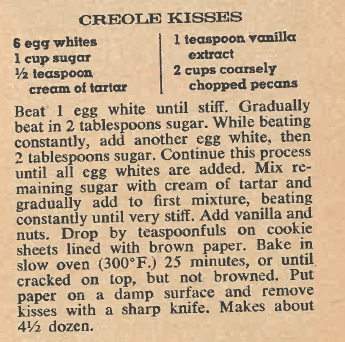
Creole Kisses Recipe from Women's Day Magazine, 1963
On Christmas Day, after the children had opened their presents and stockings, the Gordons had their Christmas dinner in the early afternoon, usually around 2:00 p.m. Dinner was an abundant and lavish occasion. Silver candelabras, white damask, and their finest china adorned the table, anchored by a centerpiece made of Juliette’s mother’s prized camelias. The meal began with seafood soup, most often oyster soup. The main course was either one or two large turkeys in addition to either Smithfield ham or duck. “Rice and gravy was inevitable at every midday meal, not just Christmas...” accompanied by candied yams, eggplant, creamed cauliflower, string beans with almonds, and beets. One element of Gordon family Christmas dinner reviled by the children was pickled peaches. In an account by Margaret Gordon Lawerence, she calls them “nasty,” and her cousins agreed.
During the meal, the children were seated at a separate table but joined the adults at the dining table for dessert. In addition to things like sponge cake, fruit cake, Creole kisses, and flaming plum pudding, dessert always included homemade ice cream and fresh strawberries. When their bellies were well and full, everyone's glasses would be filled with champagne or Madeira wine in preparation for a toast to absent friends. The children would also be offered a little wine in their glass, according to Margaret Gordon Lawrence, “No toast must ever be drunk in water!”
By nightfall, bellies were full, and everyone was warm from the proximity of family and friends. Another successful Gordon family gathering would live on in the hearts and minds of generations to come. George Arthur said it perfectly, “Backgrounds may change, but the spirit of Christmas doesn’t. It still means warmth and joy and fellowship...” and if we take a lesson from the Dickins classic A Christmas Carol, we’ll take that feeling with us all year long.
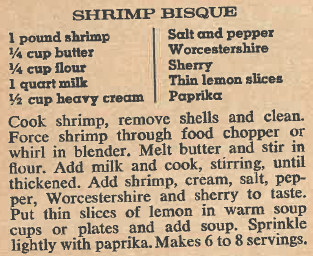
Shrimp Bisque Recipe from Women's Day Magazine, 1963
Research Sources
- Gordon, Arthur. “Low Country Christmas.” Women’s Day Magazine, December 1963.
- Gordon Lawrence, Daisy. Ts. “Christmas at the Old House,” n.d.
