You are leaving girlscouts.org for a website opened by an external party. You will be subjected to the privacy and security policies of the website
"Hidden Heroines" Series: Doris Lippman and Mildred Guckenheimer
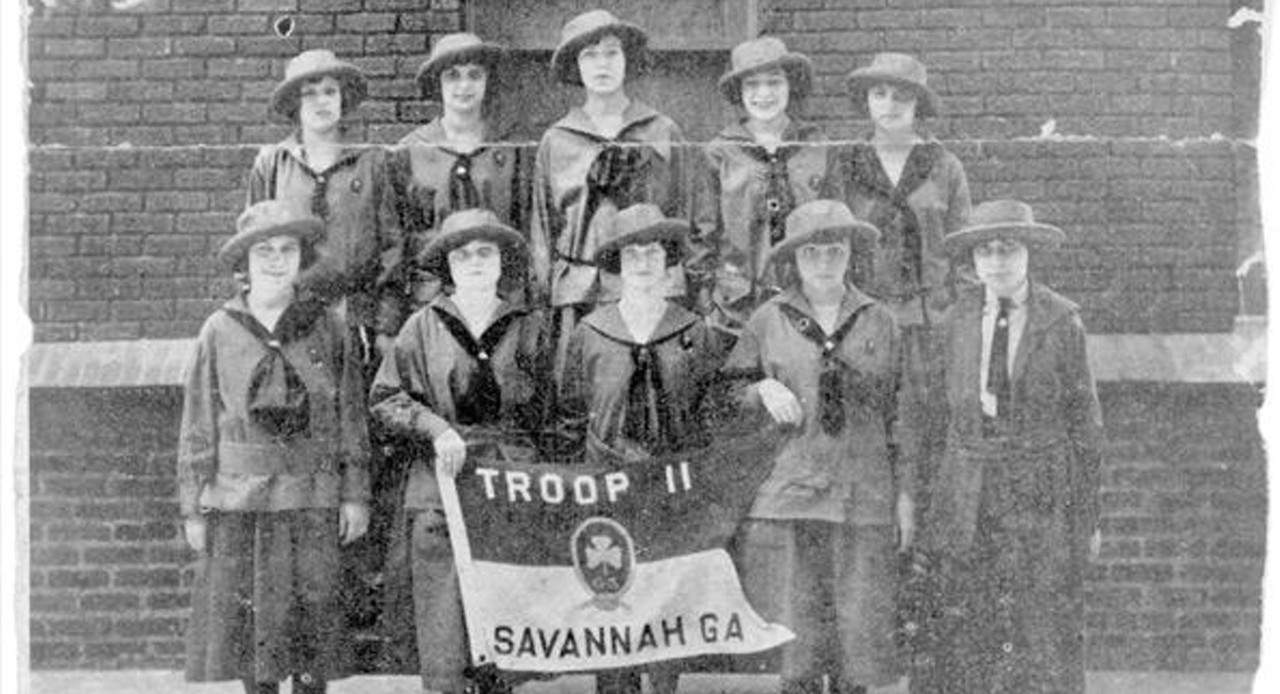
Girl Scout Troop 11 poses together. This troop was formed with the support of the Jewish Education Alliance in Savannah, GA, 1912.
Written by Elizabeth Srsic | October 22, 2026
SAVANNAH, GA - Fifty years ago in 1976, we celebrated the American Bicentennial. As a part of the festivities, Girl Scouts of the USA created a nation-wide program that highlighted the work and accomplishments of women across the country. Each council presented their "Hidden Heroines" through a series of local and national events and a bound publication which was gifted to Girl Guide alum, Queen Elizabeth II.
In honor of the sesquicentennial, we are sharing the stories of other founding members of the Girl Scout organization, our own "Hidden Heroines." This month, we're sharing the stories of two women who were prominent members of the Jewish community in Savannah and some of the first supporters of Girl Scouts.
Doris Jean Lippman in an article about Girl Scout Leaders, c. 1914.
Doris Jean Lippman Falk
Doris Jean Lippman Falk (1890-1987) was a Savannah civic leader, pioneering Girl Scout volunteer, and local heroine whose quick thinking and first aid training earned her national recognition from the American Red Cross. Born to Laurence and Florence Lippman, Doris grew up on Gaston Street in Savannah as the youngest of three daughters in a prominent Jewish family. She attended the Massie School, where she completed her studies in 1903, and later participated in programs at the Savannah School of Physical Training, reflecting an early interest in physical education and public service.
As a young woman, Lippman was active in Savannah's social and cultural life. She frequently appeared in newspaper accounts of charitable events, holiday celebrations, and civic gatherings. In 1911 she was among the fashionable attendees at the Vanderbilt Cup motor races in Savannah and later that year served as a volunteer at the popular "Cafe Chantante" fundraiser organized by local women's groups.
Doris's most lasting contribution came through the newly established Girl Scout Movement. In 1913, just one year after Juliette Gordon Low founded Girl Scouts in Savannah, Doris became one of the organization's early leaders by taking on a struggling Girl Scout troop. She joined a group of local Guide Mistresses who completed intensive Red Cross first aid training under Dr. Antonio J. Waring and Dr. Lawrence Lee. After successfully passing an oral examination that included demonstrations of bandaging, splinting, and artificial respiration, she became qualified to teach first aid skills to Savannah's Girl Scouts.
The training soon proved invaluable. In 1914, Doris used her Red Cross first aid knowledge to save the life of a man who had been overcome by gas. Her prompt and effective response attracted widespread attention and earned her the National Red Cross Prize, a prestigious award accompanied by a cash prize of $50. Newspapers across the United States carried accounts of her bravery, making her one of the most widely recognized Savannah Girl Scout leaders of the period. Her achievement demonstrated the practical value of the first aid instruction being promoted within the young Girl Scout Movement and brought positive national attention to Savannah's scouts.
In September 1918, Doris married Lieutenant Washington Falk, Jr. at Temple Mickve Israel. After her marriage, she remained active in community service, including work with the Savannah Section of the National Council of Jewish Women, where she was appointed to oversee social service activities.
Doris Lippman Falk spent nearly her entire life in Savannah, witnessing the city's transformation across the twentieth century. She died on January 25, 1987, at the age of 96. She is buried alongside her husband in Laurel Grove Cemetery North. Today, she is remembered not only as a member of one of Savannah's prominent families, but also as an early Girl Scout leader whose lifesaving actions embodied the organization's ideals of preparedness, service, and courage.
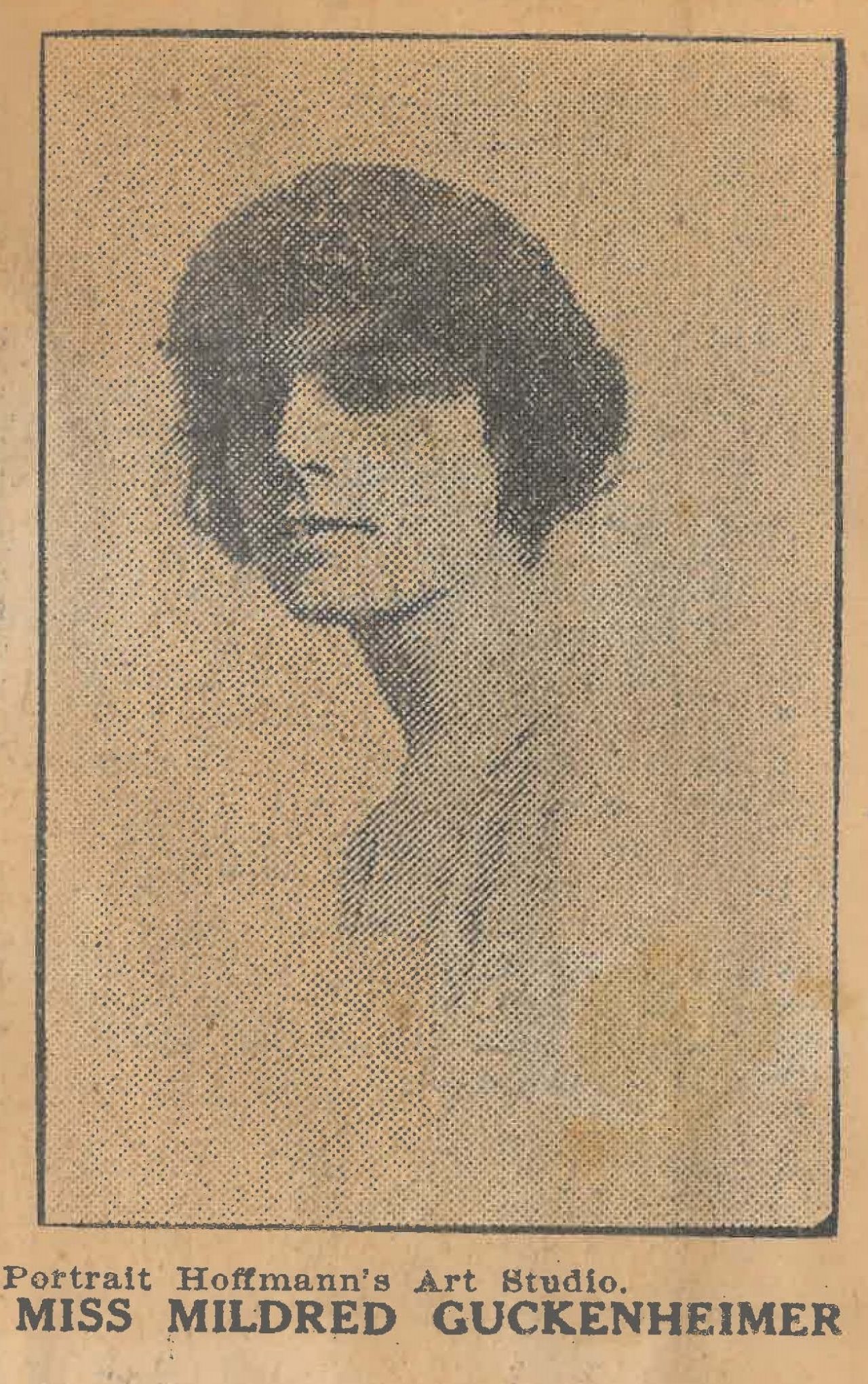
Mildred Guckenheimer in an article about Girl Scout Leaders, c. 1914.
Mildred Guckenheimer Abrahams Kuhr
Mildred Guckenheimer Abrahams Kuhr was a devoted community leader, philanthropist, and pioneering Girl Scout volunteer whose service helped shape civic and religious life in Savannah for more than half a century. Born in 1893 to Abe and Fannie Guckenheimer, she grew up in a prominent Savannah Jewish family and was active from an early age in the programs of Congregation Mickve Israel, including the Children's Purim Ball and Sunday School activities.
Mildred became one of the earliest leaders of the Girl Scout Movement in Savannah shortly after its founding by Juliette Gordon Low. Her scout captain certificate is preserved in the archives of Temple Mickve Israel, reflecting her important role in the organization's formative years. According to later recollections, she led the first Girl Scout camping trip to Warsaw Island, an adventure remembered for scarce food supplies, swarms of mosquitoes, and the girls' determination to make the best of challenging conditions. Despite the hardships, the scouts declared it one of their most memorable experiences, a testament to Mildred's enthusiasm for outdoor education and leadership.
Throughout her life, Mildred combined her commitment to Girl Scouting with a deep dedication to charitable and community service. In 1915, she participated in a local suffrage entertainment, demonstrating her support for women's civic engagement. Following her marriage to attorney Edmond H. Abrahams, she became increasingly involved in Savannah's philanthropic organizations, especially the National Council of Jewish Women. By the 1930s, she served in leadership roles within the Savannah Section, hosting executive board meetings and helping coordinate social service programs for local families in need.
Mildred also played a prominent role in Jewish communal life. She served as conference chair and toastmistress for regional gatherings of the Union of American Hebrew Congregations and the Federation of Temple Sisterhoods, helping strengthen connections among Jewish congregations throughout the Southeast. In 1969, she chaired the Interfaith Committee of the Mickve Israel Sisterhood, promoting cooperation and understanding among Savannah's religious communities. That same year, in recognition of her decades of service, she was named honorary president of the Savannah Section of the National Council of Jewish Women.
Her commitment to Congregation Mickve Israel continued long after her lifetime through the Mildred Abrahams Kuhr Music Fund, which supports professional female singers for Shabbat and holiday services in the Classical Reform tradition. The fund reflects her enduring dedication to worship, culture, and community.
Remembered as a capable organizer, mentor, and volunteer, Mildred Guckenheimer Abrahams Kuhr exemplified the ideals of service embraced by the early Girl Scout Movement. Through her leadership in scouting, charitable work, women's organizations, and Jewish communal life, she left a legacy of civic engagement and community care in Savannah.
Research Sources
Doris Lippman Biography File, Juliette Gordon Low Birthplace Museum, compiled 2026.
Mildred Guckemheimer Biography File, Juliette Gordon Low Birthplace Museum, compiled 2026.
